
Responsibility accounting and operational performance are two essential concepts in management accounting research that have recently received growing attention from both scholars and practitioners. However, empirical evidence in Vietnam remains limited, particularly in the sugar industry. This research explores the determinants of responsibility accounting implementation and its impact on the operational efficiency of sugar firms listed on the Vietnamese stock market. Adopting a quantitative methodology, the study analyzes data derived from 205 effective survey responses. To evaluate the research hypotheses, the Partial Least Squares Structural Equation Modeling (PLS-SEM) approach was utilized. Analytical findings reveal that management awareness, firm scale, decentralization, cost structure design, and market competition are significant drivers of responsibility accounting adoption. Furthermore, the results confirm that the effective utilization of responsibility accounting systems substantially enhances the operational performance of these publicly traded sugar enterprises. These findings provide empirical insights into the advancement of management accounting practices and contribute to the enhancement of organizational performance in emerging economies.
Introduction
As defined by CIMA (2005), responsibility accounting, sometimes termed activity accounting, functions as a framework that categorizes costs and revenues into specific spheres of individual accountability to evaluate the performance of those vested with authority. This systematic approach allows organizations to effectively monitor, measure, and assess decentralization initiatives through comprehensive reporting mechanisms. By utilizing these reports, managers remain fully apprised of all financial elements falling under their direct remit (Atu et al., 2014; Hao et al., 2025; Svensson & Lindberg, 2026). Furthermore, responsibility accounting provides the precise, flexible, and timely data essential for gauging managerial efficiency while simultaneously bolstering overall corporate outcomes (Tran, 2021; Kunie et al., 2025). Ultimately, the fundamental purpose of this methodology is to rigorously examine the causal connection between the professional actions undertaken by managers and the subsequent operational results achieved within their designated areas (Tran et al., 2022; Morgan et al., 2025). To achieve these goals, responsibility centers are aligned with managerial structures (Dang, 2024; Guillen & Pereira, 2024). Delegating authority allows unit leaders to strategize effectively while enabling top management to monitor performance, ultimately improving coordination, accountability, and efficiency (Biswas, 2017; Mishra et al., 2025). Within this sector, sugar firms have prioritized operational efficiency by integrating advanced management frameworks, specifically Responsibility Accounting (RA), alongside traditional cost-reduction initiatives. Listed entities face heightened expectations, necessitated by stringent corporate governance requirements, the imperative of transparent reporting, and the need to bolster investor trust. Nevertheless, empirical evidence indicates that the implementation of RA remains underdeveloped among Vietnamese listed sugar corporations. By delineating specific responsibility centers, encompassing cost, revenue, profit, and investment units (Biswas, 2017), RA provides significant organizational value. This structured approach facilitates optimized resource distribution, rigorous performance evaluation, and the rapid detection of systemic inefficiencies, thereby serving as a critical mechanism for long-term fiscal stability and improved strategic decision-making processes. This system helps managers connect decisions to outcomes while promoting transparency, accountability, and continuous improvement. In a highly competitive regional market, implementing RA provides listed Vietnamese sugar companies with a strategic foundation to optimize performance, discipline finances, and ensure sustainable growth. Empirically, most prior studies utilize quantitative methodologies, relying on primary data collected from a single industry or specific national context (Tran et al., 2022; Le & Hoang, 2023; Dang, 2024; Di Fiore et al., 2024; Nagesh et al., 2025). Prior scholarly investigations have extensively explored the catalysts behind robotic automation (RA) implementation across diverse industrial domains, including beverages (Cao, 2019), food processing (Nguyen et al., 2019), cement production, papermaking (Nguyen, 2022), automotive assembly (Huyen, 2021), textiles (Tran et al., 2022), and general manufacturing (Le & Hoang, 2023). Collectively, these empirical models highlight several significant determinants that predominantly foster a positive influence on RA integration. Nevertheless, while the overarching trend indicates a constructive impact, the specific intensity and significance of these underlying drivers fluctuate considerably based on the particular geographical context and the unique operational requirements inherent to each distinct sector within the global manufacturing landscape.
Further research has explored RA implementation and its impact on organizational performance. Empirical evidence consistently supports the link between responsibility accounting (RA) and organizational outcomes. Le et al. (2018) reported a correlation within 122 Mekong Delta enterprises, a finding echoed by Tran et al. (2022), who observed that RA adoption significantly improved performance across 385 listed textile firms. Furthermore, Shahwan et al. (2023) highlighted the substantial impact of social responsibility accounting on the financial returns of Amman Stock Exchange participants during the COVID-19 crisis, specifically regarding return on assets. Within the Vietnamese garment sector, Dang (2024) recently corroborated these findings, establishing that the implementation of RA frameworks serves as a vital catalyst for enhancing managerial effectiveness and overall professional success within the industry's modern corporate landscape today. Likewise, Sri and Setyo (2024) demonstrated that RA adoption contributes significantly to improved cost control and cost center performance.
While empirical evidence consistently links RA to positive organizational performance globally, no study has examined its impact on listed sugar companies in Vietnam. This highlights a clear research gap regarding both the factors driving RA adoption and its operational implications within this specific sector.
Based on the preceding analysis, this study addresses the following research questions:
RQ1: How do various factors influence RA application in Vietnam's listed sugar sector?
RQ2: How does RA application impact operational performance in these firms?
This study contributes to the literature by empirically testing the RA–performance framework in vietnam, deepening the theoretical understanding of how ra enhances operational efficiency. the findings offer practical guidance for managers and policymakers to promote ra adoption, optimize management accounting practices, and achieve sustainable growth.
This research expands current understanding regarding responsibility accounting (RA) and its impact on operational success. By empirically validating the RA-performance model within Vietnam, the study offers significant insights into how adopting these systems improves organizational outcomes, thus strengthening the theoretical framework of management efficiency. These finding provide essential guidance for policymakers and corporate leaders aiming to develop strategies that leverage RA for increased efficacy. Furthermore, by highlighting the critical function of RA in elevating institutional productivity, this paper delivers actionable recommendations for firms pursuing optimized accounting practice and long-term viability. Ultimately, this work serves as a foundational resource for enterprises navigating the complexities of performance management in emerging market environments.
Literature Review
Management Awareness
Managers head departments or organizations, holding ultimate authority within their scope.. Managerial consciousness is a fundamental driver in optimizing corporate governance frameworks, especially regarding the integration of strategic management instruments. As Dang (2024) observed, the pursuit of organizational objectives necessitates the consistent adoption of specialized support mechanisms. Within the sphere of management accounting, prior research suggests that firms achieve superior implementation outcomes when their leadership possesses comprehensive expertise in this discipline. Furthermore, Cao (2019) argues that the practical execution of such tools is significantly more attainable once administrators internalize their inherent value and operational utility. Consequently, these findings indicate that the successful assimilation of accounting methodologies is contingent upon management’s prior recognition of the critical advantages these systems offer, ultimately ensuring that organizational goals are met with greater precision and efficiency through informed, deliberate, and well-supported decision-making processes.
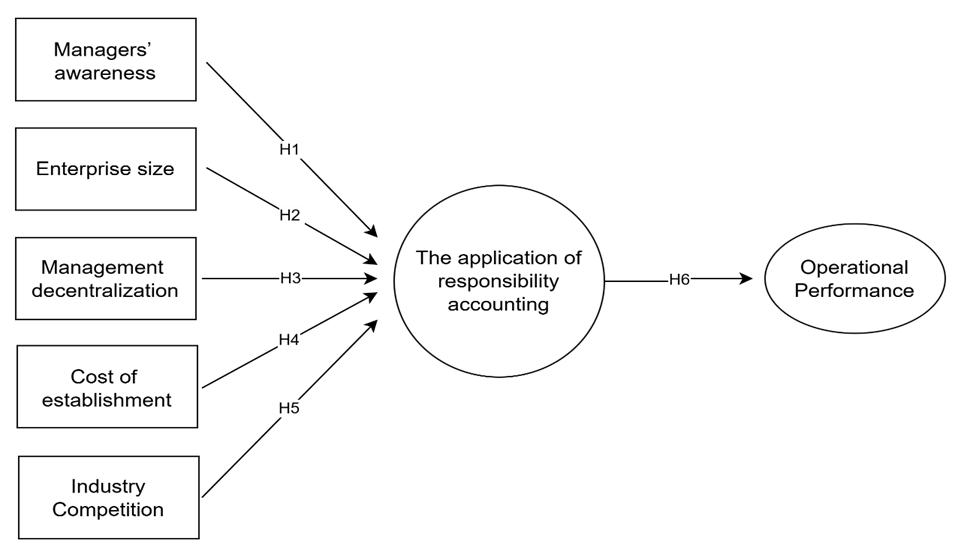
H1: Managers’ awareness has a positive effect on the application of responsibility accounting.
Enterprise Size
The concept of enterprise size denotes the organizational scale and operational magnitude of a business entity. According to Zimnicki (2016), this metric is typically evaluated through indicators such as total profit, asset value, revenue, and workforce size. Within the Vietnamese regulatory framework, Decree No. 80/2021/ND-CP categorizes businesses based on annual revenue, capital, and the yearly average of employees enrolled in social insurance programs. Empirical research by Ahmad (2012) highlights a positive correlation between organizational scale and the implementation of decision support systems, specifically accounting information tools. Furthermore, investigations by Abdel-Kader and Luther (2008) alongside Hoque and James (2000) suggest that larger firms encounter increased administrative complexity, necessitating sophisticated accounting mechanisms to manage vast information flows effectively. This requirement for enhanced governance is further supported by Hung (2022), whose analysis of 216 professionals across 102 Vietnamese organizations confirms that as enterprise scale increases, the adoption of responsibility accounting practices becomes more prevalent. Ultimately, these findings underscore how firm size remains a primary determinant of internal structural sophistication and management accounting integration.
H2: Enterprise size has a positive effect on the application of responsibility accounting.
Decentralization refers to the delegation of decision-making authority to subordinates (Hung, 2022). By decentralizing decision-making authority, organizational leaders gain the necessary autonomy to effectively plan and oversee their designated operations while maintaining clear accountability (Tran & Le, 2025). As noted by Le (2022), decentralization serves as a fundamental requirement for responsibility accounting (RA), enabling managers to actively execute core functions, including implementation and performance evaluation. Granting managers increased discretion inherently expands their professional obligations, ultimately heightening their reliance on robust information systems to facilitate informed decision-making (Cadez & Guilding, 2008). This correlation between expanded management authority and the necessity for sophisticated accounting tools has been consistently validated through various empirical investigations conducted by researchers such as Amiri et al. (2013), Nguyen et al. (2019), Tran (2021), and Le and Thanh (2023), further strengthening the established academic discourse.
H3: Management decentralization has a positive effect on the application of responsibility accounting.
Establishing Cost
When implementing management tools, setup costs encompass capital outlays for infrastructure, such as IT frameworks and data processing systems, alongside expenses for necessary staff training (Hung, 2022; Xuyen et al., 2022). Empirical evidence consistently highlights a significant correlation between overhead expenditures and the integration of these management instruments (Tran, 2016; Cao, 2019; Xuyen et al., 2022). Consequently, leaders must rigorously evaluate the balance between anticipated gains and execution costs (Tran et al., 2025). A positive perception of potential benefits typically drives managerial adoption of these tools (Doan, 2016). Moreover, when the financial burden associated with technology acquisition or professional advisory services remains minimal, the overall feasibility of implementing management accounting practices, including RA, is considerably strengthened within the organizational environment (Tran, 2016).
H4: Establishing cost has a negative effect on the application of responsibility accounting.
Industry Competition
While managers continually strive to achieve predetermined organizational goals (Dang, 2024), they face numerous challenges, chief among which is intense industry competition. According to Doan (2016), businesses engage in persistent rivalry across diverse spheres, such as sourcing raw materials, human capital acquisition, product excellence, service standards, pricing strategies, distribution networks, and portfolio variety. Research conducted by Mia and Clarke (1999), O’Connor et al. (2004), Huyen (2021), and Tran (2022) indicates that escalating market competition compels organizations to utilize a wider array of management and accounting instruments. Supporting this view, Ismail et al. (2018) posited that conventional management accounting methods no longer yield the critical data necessary for robust decision-making within contemporary, volatile markets. Consequently, intensifying competitive pressures drive firms to adopt more sophisticated managerial frameworks, a context where Revenue Accounting (RA) has emerged as an increasingly vital component for achieving sustained institutional success.
H5: Industry competition has a positive effect on the application of responsibility accounting.
Responsibility Accounting
Responsibility accounting serves as a critical management framework grounded in the decentralization of authority and departmental accountability (Le, 2022). To operationalize this system successfully, firms must organize into structured responsibility centers. Scholarly literature typically categorizes these organizational units into four distinct classifications: cost, revenue, profit, and investment centers, which collectively facilitate effective performance evaluation (Biswas, 2017). Each center prepares a revenue and expenditure budget for performance evaluation. According to Macintosh and Quattrone (2010), RA involves collecting and reporting center-specific accounting data—RA reports—to assess managerial performance. This method enables robust oversight and control of corporate activities while guaranteeing consistency with the organization’s strategic objectives (Chi & Luong, 2018). Briefly, implementing responsibility accounting involves four principal phases: (1) pinpointing and categorizing responsibility units; (2) formulating budgets to gather, process, analyze, and disseminate pertinent data; (3) assessing each unit’s performance; and (4) creating a structured set of RA reports for managerial decision-making.
H6: The application of responsibility accounting has a positive effect on operational performance.
Operational Performance
Metrics for evaluating operational success are generally bifurcated into financial and non-financial frameworks. Monetary indicators, such as profit margins and return on investment, are instrumental in assessing immediate fiscal health and resource management (Kaplan & Norton, 1992). Conversely, non-financial metrics focus on process efficiency, including cycle times, product reliability, and inventory turnover rates. Ultimately, these diverse performance dimensions serve as critical drivers for broader organizational achievements, significantly impacting long-term customer satisfaction levels and overall market competitiveness (Voss et al., 1997). Non-financial measures focus on operational and strategic drivers—like customer satisfaction and process efficiency—serving as early indicators of long-term competitiveness (Ittner & Larcker, 1998). Integrating financial and non-financial metrics provides a balanced view of organizational effectiveness. Performance remains central to management accounting and RA (Tran et al., 2022), with effective RA positively influencing profit center managers' outcomes (Tuan, 2017).
Proposed Research Model
Grounded in responsibility accounting theory and the current context of Vietnam’s sugar industry, the proposed research model is illustrated in Figure 1.
|
|
|
Figure 1: Proposed Research Model |
Materials and Methods
Methodology and Measurement Scales
Subsequent to the qualitative analysis, a quantitative study was conducted utilizing primary data gathered via structured surveys. These questionnaires were administered to 285 participants, comprising board members, departmental directors, financial officers, and production managers. These individuals represent the essential personnel tasked with the practical application of RA practices within their respective corporate organizational structures. The sampling method employed was convenience sampling.
The research sample includes listed of 9 sugar biggest companies across Vietnam's three main regions, distributed as 40% North, 25% Central, and 35% South to ensure regional representation. Northern firms (e.g., Lam Son, Son La, Vinasugar, Cao Bang) operate in mountainous raw material areas, while Central firms (Kon Tum, Quang Ngai) span coastal and highland zones. The Southern sample features large-scale market leaders like Thanh Thanh Cong – Bien Hoa JSC, alongside Bibica and Bien Hoa Sugar.
From January 1 to March 31, 2025, 285 questionnaires were distributed, yielding 260 responses (91.23% response rate). After screening for completeness, 205 usable responses were retained for analysis.
The collected data were processed and analyzed using SMART PLS 3.0 software. The research methodology involved multiple analytical phases: first, verifying scale reliability through Cronbach’s alpha and composite reliability indices. Subsequently, construct validity was established using AVE and HTMT ratios. Multicollinearity was diagnosed via inner and outer VIF metrics. Finally, the structural model was assessed utilizing Partial Least Squares Structural Equation Modeling (PLS-SEM) to perform a rigorous evaluation of the proposed research hypotheses.
Drawing on existing literature and qualitative insights, this research formulated measurement items for the six constructs defined in our model, as detailed in Table 1. Each variable utilized a five-point Likert scale, spanning from “strongly disagree” to “strongly agree.” This methodical approach establishes a robust framework, ensuring the necessary empirical rigor for evaluating the proposed conceptual model and its associated research hypotheses.
Table 1. Measurement scales of variables in the research model
|
Variables |
Iterm |
Scales |
Source |
|
Managers’ awareness (MA) |
MA1 MA2
MA3
MA4 |
(1) Leader's understanding of RA; (2) recognition of its benefits; (3) perceived organizational necessity; and (4) willingness to fund its implementation costs. |
Dien et al., 2020; Tung et al.,(2022) Le & Thanh, (2023) Oanh (2023); Dang (2024) |
|
Firm size (EZ) |
EZ1 EZ2 EZ3 |
(1) Total asset value, (2) workforce size, and (3) annual revenue. |
Hoque & James (2000); Ahmad (2012); Cao (2019) Hung (2022) |
|
Management decentralization (MD) |
MD1
MD2 MD3 MD4 |
(1) Management hierarchy for investments, (2) revenue, (3) costs, and (4) profits. |
Amiri et al. (2013); Nguyen et al. (2019); Dien et al., (2020); Tran, Q.T (2021); Tung et al.,(2022); Le & Thanh, (2023); Dang (2024) |
|
Cost of Establishment (CE) |
CE1 CE2 |
(1) Infrastructure investment costs and (2) human resource training costs. |
Tran (2016) Cao (2019) Xuyen (2022) |
|
Industry competition (IC)
|
IC1 IC2 IC3 IC4 IC5 |
(1) Raw materials, (2) labor, (3) product/service quality, (4) product/service diversity, and (5) price and other competitive aspects. |
Chenhall & Morris, (1986); Gordon & Narayanan, (1984); & Lukka, (1998); Libby & Waterhouse, (1996); Mia & Clarke (1999); Doan (2016); O'Connor (2004) |
|
The Application of responsibility accounting (ARA) |
ARA1
ARA2
ARA3
ARA4 |
(1) Responsibility center classification, (2) budgeting by center, (3) performance evaluation criteria, and (4) responsibility reporting systems. |
Hoang (2022); Chi & Luong (2019) Xuyen (2022); Le (2023); Dang (2024).
|
|
Operational performance (OP) |
OP1 OP2 OP3 OP4 OP5 |
(1) Operational reliability, (2) production cycle time, (3) market share, (4) inventory turnover, and (5) customer satisfaction. |
Voss et al. (1997); Tran et al. (2022); Tuan (2017) |
Results and Discussion
Reliability of Measurement Scales
Scale reliability was evaluated using Cronbach’s Alpha and Composite Reliability, which range from 0 to 1, with values above 0.70 indicating optimal reliability (Nunnally & Bernstein, 1994; Hair et al., 2017). As shown in Table 2, all constructs exceeded this 0.70 threshold. Additionally, Average Variance Extracted values exceeded 0.50, confirming strong internal consistency and construct reliability Table 2.
Table 2. Reliability and composite consistency
|
Research scale |
Cronbach’s Alpha |
Composite Reliability (CR) |
Average variance extracted (AVE) |
|
ARA |
0.884 |
0.920 |
0.741 |
|
CE |
0.770 |
0.897 |
0.813 |
|
ES |
0.875 |
0.922 |
0.799 |
|
IC |
0.920 |
0.940 |
0.757 |
|
MA |
0.922 |
0.945 |
0.810 |
|
MD |
0.897 |
0.928 |
0.763 |
|
OP |
0.945 |
0.958 |
0.820 |
Evaluation of Convergent and Discriminant Validity of Measurement Scales
Convergent validity was evaluated using the AVE. Outer loadings above 0.70 indicate high indicator commonality, while an AVE greater than 0.50 ensures that a construct accounts for more than 50% of its indicators' variance (Hair et al., 2017). All constructs in our dataset exceeded the 0.50 AVE threshold, confirming robust convergent validity.
To evaluate discriminant validity, the Heterotrait-Monotrait (HTMT) ratio was employed. Since elevated HTMT figures suggest potential issues regarding construct distinction, maintaining lower values is essential for ensuring that variables remain theoretically unique. As established by Henseler et al. (2015), an HTMT threshold of 0.90 serves as the benchmark for confirming valid differentiation. As presented in Table 3, all calculated HTMT ratios in this research remain below this critical limit. Consequently, these findings verify that the measurement scales satisfy the necessary criteria, confirming that each construct is successfully and appropriately distinct.
Table 3. Heterotrait-Monotrait Ratio
|
|
ARA |
CE |
ES |
IC |
MA |
MD |
OP |
|
ARA |
|
|
|
|
|
|
|
|
CE |
0.631 |
|
|
|
|
|
|
|
ES |
0.393 |
0.283 |
|
|
|
|
|
|
IC |
0.554 |
0.449 |
0.099 |
|
|
|
|
|
MA |
0.541 |
0.384 |
0.209 |
0.417 |
|
|
|
|
MD |
0.622 |
0.491 |
0.346 |
0.439 |
0.337 |
|
|
|
OP |
0.777 |
0.663 |
0.375 |
0.538 |
0.533 |
0.613 |
|
Multicollinearity Check of Independent Variables (Inner VIF)
Prior to examining the structural model, it is imperative to evaluate multicollinearity between independent variables by calculating Variance Inflation Factor scores. Following the guidelines established by Hair et al. (2019), VIF thresholds are categorized as follows: values at or above 5 suggest significant collinearity issues; values between 3 and 5 indicate potential concerns; and values below 3 signify the absence of meaningful collinearity. As the results, the current research findings reveal that all VIF coefficients remain strictly below 3. Consequently, these results confirm that multicollinearity does not pose a substantial threat to the integrity of the proposed structural model.
Evaluation of Independent Variables’explanatory Power on Dependent Variables
The model's explanatory power was assessed using R2 values. The R2 for the application of ARA is 0.535, meaning the model explains 53.5% of its variance, with the remaining 46.5% attributed to error and external factors. Similarly, the R2 for OP is 0.503, indicating the independent variables account for 50.3% of its variance, leaving 49.7% unexplained by the model.
The Results of Model Estimation
The structural model was computed with a 5,000-iteration limit and a convergence threshold of 0.00000001. As illustrated in Figure 2, the algorithm reached convergence more rapidly than originally projected. Furthermore, the empirical findings, represented by R² values and regression coefficients within each node, offer significant clarity regarding the intensity and nature of the relationships observed between the variables included in this specific analysis.
The empirical findings reveal that MA exerts a meaningful influence on the application of ARA, yielding a path coefficient of 0.223, which explains 22.3% of the variance. ES also positively impacts this implementation, with a coefficient of 0.157, accounting for 15.7% of the total variance. Furthermore, MD demonstrates a substantial effect of 0.261, representing 26.1% of the explained variance. Similarly, CE contributes to the adoption process with a coefficient of 0.210, or 21.0% of the variance, while IC correlates with a coefficient of 0.228, addressing 22.8% of the total variance. Ultimately, the ARA remains a critical driver for OP, showcasing a robust path coefficient of 0.711, which accounts for 71.1% of the total variance observed in the study’s comprehensive statistical model.
|
|
|
Figure 2. Model estimation results |
Hypothesis Testing
The SmartPLS structural model assessment confirmed that every formulated hypothesis was validated. According to the findings presented in Table 4, CE significantly and positively influences the ARA (β = 0.228, t = 3.632, p < 0.001). Furthermore, ES (β = 0.157, t = 3.281, p = 0.001), IC (β = 0.210, t = 3.534, p < 0.001), MA (β = 0.223, t = 3.744, p < 0.001), and MD (β = 0.261, t = 4.870, p < 0.001) all demonstrate substantial positive effects on ARA implementation. Additionally, the results indicate that ARA exerts a robust and statistically significant impact on OP (β = 0.711, t = 19.310, p < 0.001). The calculated R² values reveal that the model accounts for 53.5% of the variance in ARA and 50.5% in OP, highlighting a highly satisfactory level of overall explanatory power.
These findings support all six hypotheses (H1 – H6), confirming that organizational and managerial factors positively drive the ARA, which subsequently enhances OP.
Table 4. PLS-SEM Results for Path Coefficients and Significance
|
|
Β |
T value |
P – value |
VIF |
Result |
R2 |
|
CE -> ARA |
0.228 |
3.632 |
0.000 |
1.340 |
Accepted |
0.535 |
|
ES -> ARA |
0.157 |
3.281 |
0.001 |
1.141 |
||
|
IC -> ARA |
0.210 |
3.534 |
0.000 |
1.382 |
||
|
MA -> ARA |
0.223 |
3.744 |
0.000 |
1.264 |
||
|
MD -> ARA |
0.261 |
4.870 |
0.000 |
1.416 |
||
|
ARA -> OP |
0.711 |
19.310 |
0.000 |
1.000 |
0.505 |
The relationship between MA and the ARA is positive and significant (β = 0.223), accounting for 20.66% of the model's explanatory power with a small effect size (f2 = 0.085). This modest yet substantial effect aligns with prior literature (Dang, 2024; Le, 2022; Cao, 2019), confirming that managerial cognition directly shapes RA design. In Vietnam's increasingly competitive sugar sector, policymakers and industry associations should leverage this by offering targeted incentives, training, and capacity-building programs to raise awareness and embed RA into strategic planning.
Enterprise size has a positive but modest effect on RA adoption (β = 0.157, f2 = 0.047), accounting for 14.54% of the explanatory power—the least among the five antecedents. This aligns with prior literature (Hoque & James, 2000; Cao, 2019; Hung, 2022), confirming that firm size facilitates, but does not guarantee, effective practice adoption. In Vietnam's sugar sector, smaller firms are constrained by limited resources, personnel, and fragmented networks, whereas larger firms leverage formal structures for better implementation. Ultimately, size is a supportive rather than determining factor; firms must pair growth with enhanced managerial awareness and integrated information systems to successfully adopt RA.
Decentralization is the strongest driver of RA adoption β = 0.261, f2 = 0.103), accounting for 24.18% of the model's explanatory power. This aligns with prior literature (Dien et al., 2020; Le et al., 2023), confirming that decentralized structures foster RA implementation. While decision-making in Vietnam's sugar industry remains historically centralized at the board level, larger firms are expanding autonomy for subsidiaries to boost flexibility and clarify accountability. Consequently, decentralization acts as a strategic enabler; to maximize its impact, firms should pair delegated authority with robust internal controls, clear responsibility centers, and enhanced mid-level managerial capabilities.
Surprisingly, establishment cost exhibits a positive path coefficient (β = 0.228, f2 = 0.083), accounting for 21.13% of the explanatory power. Contrary to the initial hypothesis and prior studies (Tran, 2016; Cao, 2019; Dinh, 2022) that viewed cost as a constraint, this result suggests it supports RA adoption. In Vietnam's listed sugar companies, expenditures on training, infrastructure, and technology are increasingly treated as strategic investments aligned with digital transformation rather than mere expenses. Consequently, firms should view establishment costs as long-term investments in modernization, while policymakers should provide supportive financial and training programs to ease this institutionalization.
Industry competition has a significant positive effect on RA adoption (β = 0.210, f2 = 0.069), contributing 19.46% to the model's explanatory power. Driven by domestic and international pressures—especially following ASEAN trade liberalization—Vietnamese sugar companies leverage RA to enhance efficiency and accountability. This aligns with prior literature (Mia & Clarke, 1999; Doan, 2016) showing that competition fosters sophisticated management accounting; however, this study highlights a direct path to RA institutionalization. To adapt, firms should embed RA into digital platforms to boost managerial competency, supported by industry-led benchmarking and training programs.
The path from ARA to OP is highly significant, boasting a very strong path coefficient (β = 0.711) and a large effect size (f2 = 1.022). This establishes RA as the model's most powerful determinant of performance, confirming that structured RA systems optimize cost control and decision quality (Hoque & James, 2000; Ahmad, 2012). For Vietnamese sugar companies navigating volatile prices and ATIGA-induced regional competition, RA provides a vital framework for clear accountability. Ultimately, driving RA adoption through digital integration and manager training will substantially improve operational performance and industry competitiveness.
This study provides empirical evidence on the determinants of RA adoption in Vietnam’s listed sugar companies. Management decentralization exerts the strongest positive impact, followed by managerial awareness, industry competition, and enterprise size. Counterintuitively, establishment costs also show a positive, modest effect, while firm size is the least influential factor. Crucially, RA application exerts an exceptionally strong effect on operational performance, proving its role as a strategic foundation for efficiency and competitiveness. Future research could extend these insights by exploring how digital transformation or environmental uncertainty moderates the RA–performance relationship.
Conclusion
This study examines the determinants of ARA and its impact on OP in Vietnam’s listed sugar companies. Management decentralization is the primary driver of RA adoption, followed by manager awareness, industry competition, firm size, and establishment cost. Crucially, RA application strongly enhances operational performance, highlighting its vital role in improving efficiency, accountability, and decision-making quality.
Theoretically, this study validates a structural model integrating organizational, behavioral, and contextual drivers of RA, demonstrating how decentralization and competitive dynamics reinforce accounting institutionalization in emerging markets. Practically, the findings emphasize that strengthening managerial structures, training, and digital infrastructure is essential to support effective RA and improve firm competitiveness.
Although this research provides valuable insights, it possesses inherent constraints. The analysis is limited by a modest cohort of 205 participants from Vietnam’s sugar sector, potentially restricting the broader applicability of the results. Furthermore, the singular geographic and industrial focus precludes an evaluation of diverse economic environments or ownership structures. To enhance the depth of future scholarly inquiry, investigators should incorporate cross-industry or international datasets, utilize longitudinal methodologies, and integrate moderating variables like corporate culture or digital transformation. These advancements would yield a more sophisticated and holistic comprehension of how resource accounting adoption influences organizational outcomes.
Acknowledgments: None
Conflict of Interest: None
Financial Support: None
Ethics Statement: None
Abdel-Kader, M., & Luther, R. (2008). The impact of firm characteristics on management accounting practices: A UK-based empirical analysis. The British Accounting Review, 40(1), 2–27. doi:10.1016/j.bar.2007.11.003
Ahmad, K. (2012). The use of management accounting practices in Malaysian SMEs (Doctoral dissertation, University of Exeter, Malaysia).
Amiri, A., Salari, H., Omidvar, M., & Thomas, J. (2013). Effectiveness of responsibility accounting system on the organizational structure and manager’s authority. International Journal of Research in Computer Application & Management, 3(8), 44–46. https://ijrcm.org.in/download.php?name=ijrcm-2-IJRCM-2_vol-3_2013_issue-8_Abstract.pdf&path=uploaddata%2Fijrcm-2-IJRCM-2_vol-3_2013_issue-8_Abstract.pdf&utm
Atu, O. O. K., Ogbeide, E., Agbo, I. S., & Ozele, C. E. (2014). Responsibility accounting: An overview. IOSR Journal of Business and Management, 16(1), 73–79. https://www.iosrjournals.org
Biswas, T. (2017). Responsibility accounting: A review of related literature. International Journal of Multidisciplinary Research and Development, 4(8), 202–206. https://www.researchgate.net/profile/Tanmay-Biswas/publication/339302404_Responsibility_accounting_A_review_of_related_literature/links/5e4a5f38458515072da4678d/Responsibility-accounting-A-review-of-related-literature.pdf
Cadez, S., & Guilding, C. (2008). An exploratory investigation of an integrated contingency model of strategic management accounting. Accounting, Organizations and Society, 33(7–8), 836–863.
Cao, T. H. T. (2019). Research on factors affecting the organization of responsibility accounting in enterprises: Data at units under SABECO Corporation. Science and Technology Journal, 55, 149–156. https://jst-haui.vn/en/published-numbers/journal-of-science-and-technology-no-55-december-2019/63333?utm
Chartered Institute of Management Accountants. (2005). CIMA official terminology. CIMA Publishing.
Chenhall, R. H., & Morris, D. (1986). The impact of structure, environment, and interdependence on the perceived usefulness of management accounting systems. Accounting Review, 61(1), 16–35. https://www.jstor.org/stable/247520
Chi, N. T., & Luong, N. V. (2018). Research on responsibility accounting in Vietnamese import-export enterprises (Research Project). Academy of Finance.
Dang, L. A. (2024). Factors affecting responsibility accounting and its impact on management performance of textile and garment enterprises in Vietnam. Cogent Business & Management, 11(1), Article 2371067. doi:10.1080/23311975.2024.2371067
Di Fiore, A., Stellini, E., Savio, G., Rosso, S., Graiff, L., Granata, S., Monaco, C., & Meneghello, R. (2024). A Review of Recent Literature on the Handling of Anterior Resin-Bonded Cantilever Restorations. Journal of Current Research in Oral Surgery, 4(1), 1-8. doi:10.51847/JcU1FD46Qw
Dien, N. T., Le, D. M. D., Thuy, N., & Tien, N. H. (2020). Factors affecting responsibility accounting at joint stock commercial banks in Vietnam. Journal of Southwest Jiaotong University, 55(4), 1–10. doi:10.35741/issn.0258-2724.55.4.22
Doan, N. P. A. (2016). Factors affecting the application of management accounting and its impact on business performance. Journal of Development Economics, 226(II), 45–53. doi:10.33301/2016.18.01.04
Gordon, L. A., & Narayanan, V. K. (1984). Management accounting systems, perceived environmental uncertainty, and organization structure: An empirical investigation. Accounting, Organizations and Society, 9(1), 33–47. doi:10.1016/0361-3682(84)90028-X
Government of the Socialist Republic of Vietnam. (2021). Decree No. 80/2021/ND-CP on supporting small and medium-sized enterprises. https://vbpl.vn/TW/Pages/vbpq-toanvan.aspx?ItemID=151379
Granlund, M., & Lukka, K. (1998). Towards increasing business orientation: Finnish management accountants in a changing cultural context. Management Accounting Research, 9(2), 185–211.
Guillen, J., & Pereira, R. (2024). Institutional influence on gender entrepreneurship in Latin America. Annals of Organizational Culture, Leadership and External Engagement Journal, 5, 28–38. doi:10.51847/RaQltcyzXu
Hair, J. F., Black, W. C., Babin, B. J., & Anderson, R. E. (2019). Multivariate data analysis (8th ed.). Cengage Learning.
Hao, C., Fang, L., & Lin, Z. (2025). Autonomous AI agent for QSAR modeling with dataset curation, descriptor selection, and domain assessment. Pharmacophore, 16(4), 11–21. doi:10.51847/Bhyi6RjARa
Henseler, J., Ringle, C. M., & Sarstedt, M. (2015). A new criterion for assessing discriminant validity in variance-based structural equation modeling. Journal of the Academy of Marketing Science, 43(1), 115–135. doi:10.1007/s11747-014-0403-8
Hoque, Z., & James, W. (2000). Linking balanced scorecard measures to size and market factors: Impact on organizational performance. Journal of Management Accounting Research, 12(1), 1–17. doi:10.2308/jmar.2000.12.1.1
Hung, P. H. (2022). Influence of factors on responsibility accounting organization in enterprises: Evidence from Vietnam. Journal of Positive School Psychology, 6(7), 4112–4130.
Huyen, C. T. (2021). Responsibility accounting at automobile manufacturing enterprises in Vietnam (Doctoral dissertation, The University of Commerce).
Ismail, K., Isa, C. R., & Mia, L. (2018). Market competition, lean manufacturing practices and the role of management accounting systems (MAS) information. Jurnal Pengurusan, 52, 47–61.
Ittner, C. D., & Larcker, D. F. (1998). Innovations in performance measurement: Trends and research implications. Journal of Management Accounting Research, 10, 205–238. https://ssrn.com/abstract=137278
Kaplan, R. S., & Norton, D. P. (1992). The balanced scorecard: Measures that drive performance. Harvard Business Review, 70(1), 71–79.
Kunie, K., Kawakami, N., Shimazu, A., Yonekura, Y., & Miyamoto, Y. (2025). Examining the impact of managerial communication on the link between nurses' job performance and psychological empowerment. Annals of Organizational Culture, Leadership and External Engagement Journal, 6, 1–7. doi:10.51847/SF5ZX3J4OT
Le, T. Y. O., & Hoang, T. H. (2023). Factors affecting responsibility accounting: Evidence from Vietnamese manufacturing enterprises. International Journal of Professional Business Review, 8(6), Article e02188. doi:10.26668/businessreview/2023.v8i6.2188
Libby, T., & Waterhouse, J. H. (1996). Predicting change in management accounting systems. Journal of Management Accounting Research, 8, 137–150. https://papers.ssrn.com/sol3/Delivery.cfm/SSRN_ID1543441_code1332876.pdf?abstractid=1543441
Mia, L., & Clarke, B. (1999). Market competition, management accounting systems and business unit performance. Management Accounting Research, 10(2), 137–158. https://www.semanticscholar.org/paper/Market-competition,-management-accounting-systems-Mia-Clarke/8a6da4b5271384177f82628c2eca8458a4d1f218?utm
Mishra, N., Dadhich, A., Vande, A. V., Saluja, H., Shah, S., & Mishra, M. (2025). A comparative assessment of topical 5-fluorouracil and modified Carnoy's solution for the treatment of odontogenic keratocyst. Journal of Current Research in Oral Surgery, 5(1), 11–16. doi:10.51847/OrVjjlmrxW
Morgan, A. L., Foster, D. K., & Collins, I. J. (2025). Disparities in HER2-targeted therapy adoption and survival impact in metastatic HR−/HER2+ breast cancer: NCDB cohort study. Asian Journal of Current Research in Clinical Cancer, 5(2), 1–11. doi:10.51847/AZI4JURGlQ
Nagesh, D., Lam Ip, C. Y. T., Li, K., Wong, H. S. L., & Chai, J. Y. H. (2025). Navigating support networks: A Somali woman's experience of social alignment to overcome isolation during pregnancy and early motherhood. International Journal of Social Psychology Aspects of Healthcare, 5, 35–48. doi:10.51847/iJoPhqpXaV
Nguyen, N. T., Nguyen, T. L. H., & Pham, D. C. (2019). Factors affecting responsibility accounting in Vietnamese firms: A case study for livestock food processing enterprises. Management Science Letters, 9(6), 1349–1360. doi:10.5267/j.msl.2019.5.015
Nguyen, T. H. (2022). Factors affecting the implementation of environmental management accounting: A case study of pulp and paper manufacturing enterprises in Vietnam. Cogent Business & Management, 9(1), 2141089. doi:10.1080/23311975.2022.2141089
Svensson, A., & Lindberg, E. (2026). Explainable AI for pediatric dosing error prediction using prescription text and weight-based rules. Pharmacophore, 17(2), 1–11. doi:10.51847/v5wAxGMQYm
Tran, N. H. (2016). Factors affecting the application of international accounting in Vietnamese small and medium enterprises (Doctoral dissertation, University of Economics Ho Chi Minh City).
Tran, Q. T. (2021). Factors affecting the application of responsibility center accounting in Vietnamese enterprises. Journal of Asian Finance, Economics and Business, 8(7), 491–499. doi:10.13106/jafeb.2021.vol8.no7.491
Tran, V. T., Ly, P. C., Ngo, N. N. T., Tran, P. H., & Nguyen, V. C. (2022). Factors affecting the implementation of responsibility accounting on firm performance: Empirical analysis of listed textile firms. Cogent Business & Management, 9(1), 2032912. doi:10.1080/23311975.2022.2032912
Xuyen Dinh, T. K., Nguyen, T. D., & Nguyen, T. H. (2022). Factors affecting the application of environmental accounting in manufacturing enterprises in Vietnam. Journal of Accounting, Finance and Auditing Studies, 8(3), 115–140. doi:10.32602/jafas.2022.020
Zimnicki, T. (2016). Responsibility accounting inspiration for segment reporting. Copernican Journal of Finance & Accounting, 5(2), 219–232. doi:10.12775/CJFA.2016.024